Kitchen Small Electronic Appliances Market Size
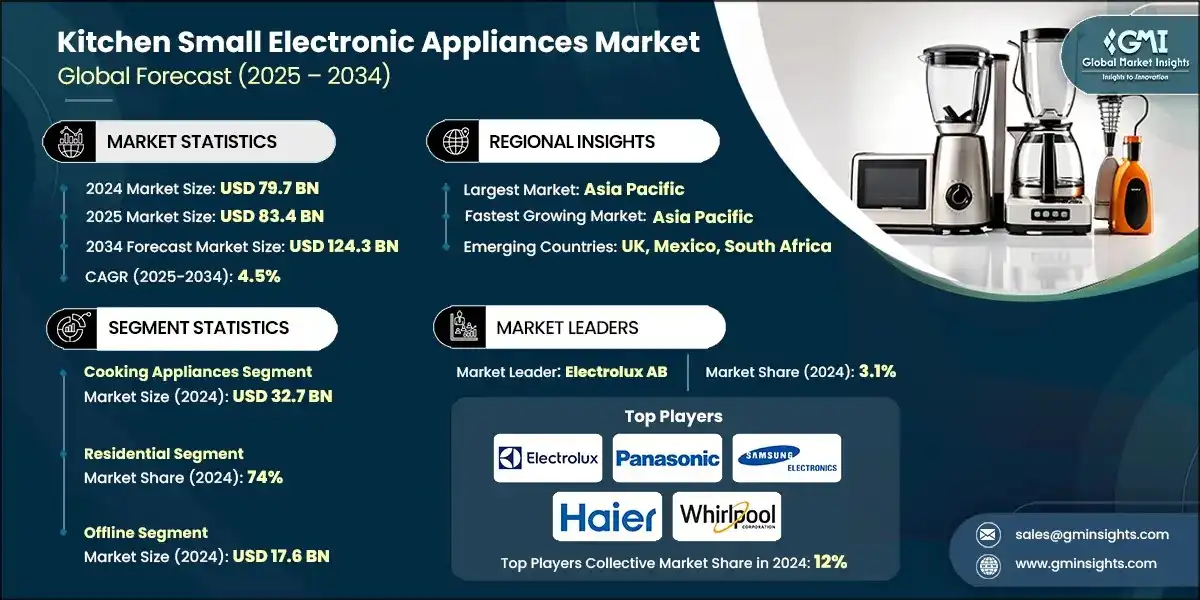
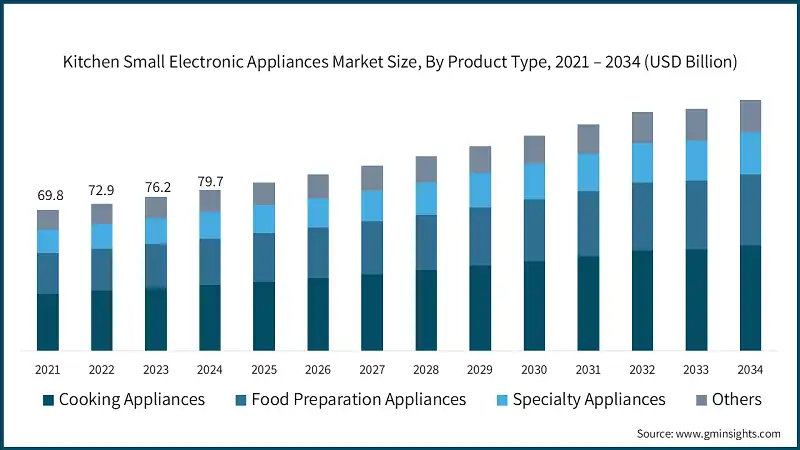
The global kitchen small electronic appliances market was estimated at USD 79.7 billion in 2024. This figure is expected to grow from USD 83.4 billion in 2025 to an impressive USD 124.3 billion by 2034, achieving a compound annual growth rate (CAGR) of 4.5%. This growth trajectory highlights a burgeoning demand, driven by the convergence of technology, health consciousness, and changing consumer lifestyles.
Technological Innovation Driving Change
The incorporation of smart technologies in small cooking devices is reshaping consumer perceptions. Devices like Wi-Fi-enabled coffee pots, air fryers, and smart ovens empower users to control cooking settings remotely. Features like programmable cooking times and temperature adjustments, accessible via mobile applications or voice commands, make meal prep convenient. Notably, commercial users find value in predictive maintenance powered by these technologies, significantly extending the product experience and lifespan.
Moreover, manufacturers harness both Internet Connectivity and Artificial Intelligence (AI) to create appliances that learn user preferences. These innovations include smart ovens suggesting recipes based on available ingredients or smart blenders tracking nutritional intake. As homes become more digitized, such technologies represent substantial growth potential in the appliance market.
Health-conscious Consumer Trends
A significant shift towards health-based lifestyles is propelling demand for kitchen appliances that facilitate healthier cooking. Devices like air fryers, steamers, and juicers are gaining traction as they allow for low-fat cooking while preserving nutrients. This trend is particularly prevalent among younger consumers in urban settings, where the dual desire for speed and health aligns perfectly.
Manufacturers are responding to this demand by developing appliances equipped with features for calorie tracking and portion control. As global awareness of healthy eating rises, brands are seizing the opportunity to create kitchen appliances that streamline the process of preparing nutritious meals.
Market Trends
The kitchen small electronic appliances market is evolved and ever-changing, influenced by several key drivers:
-
Smart Connectivity: Kitchen appliances are becoming increasingly integrated with Wi-Fi and Bluetooth technology, allowing consumers to manage cooking tasks remotely. This leap in convenience is transforming the consumer experience.
-
Healthy Living Awareness: With an emphasis on improved nutrition, products promoting low-fat cooking are soaring in popularity. This demand extends to appliances capable of portion control and integrating with fitness apps.
-
Sustainability Concerns: Regulatory pressures are resulting in a push for energy-efficient and eco-friendly appliances. The market is witnessing a surge in products that align with consumer desires for sustainability.
-
Urbanization: As urban living becomes the norm, compact, multi-functional kitchen gadgets are in high demand. Consumers are favoring products that deliver versatility without occupying excessive space.
Market Analysis
The market for small kitchen electronics is notably segmented by product type, end use, and distribution channels.
-
Product Segmentation: Cooking appliances captured the largest market share in 2024, generating USD 32.7 billion. This segment includes air fryers, electric ovens, and induction cooktops, among others. Compact and energy-efficient cooking products resonate with consumers who face space and time constraints.
-
End Use Insights: With 74% of the total market share, the residential segment is significantly larger than commercial use. Increasing urbanization and disposable income are elevating the demand for convenient cooking options in households.
-
Distribution Channels: Traditional retail continues to dominate, but the rapid rise of e-commerce is transforming the market landscape. Online shopping provides convenience, a diverse product range, and competitive pricing.
Regional Insights
North America: The U.S. market is highly developed, accounting for approximately 84% of the North American share in 2024, generating around USD 20 billion in revenue. Technological innovation and an increase in disposable income are fuelling demand.
Europe: Germany leads the European market with a 23% share in 2024, driven by consumers’ preference for energy-efficient appliances. Governments are promoting sustainable practices through strict regulations.
Asia Pacific: With China at the forefront, holding around 32.7% of the market share in 2024, the region is poised for significant growth. Urbanization and rising disposable incomes are key drivers, motivating manufacturers to deliver affordable smart products.
Middle East and Africa: The regional market is growing at a CAGR of 3.8%, driven by urbanization and increasing disposable income. In urban centers, demand for high-end appliances is on the rise, while affordability remains a priority for consumers in Africa.
Market Share and Leading Companies
Leading players in the kitchen small electronic appliances market include Electrolux AB, Panasonic, Samsung Electronics, Haier, and Whirlpool, capturing a collective market share of about 12%. Electrolux AB stands out with a 3.1% share, known for its commitment to sustainable innovation.
Breville, focusing on high-quality, sophisticated designs, and Philips, with a health-centric product approach, are also significant players. Both brands are leveraging technology to create appliances that cater to the modern consumer’s needs.
Industry News and Innovations
Recent industry happenings highlight the continuous innovation occurring within the space. For example:
- Electrolux launched the Controlled Stone Baked Pizza Oven, catering to consumers desiring authentic, restaurant-level cooking at home.
- Haier unveiled new kitchen appliances with advanced temperature controls.
- Panasonic’s latest offering, the HomeCHEF Connect Multi-Oven, combines various cooking methods into one smart device.
These innovations indicate a clear trend towards multifunctionality and consumer-centric design within the kitchen appliance market.
The kitchen small electronic appliances market is continuously benefiting from technological advancements, consumer demands for health and convenience, and evolving lifestyles. These elements together create a dynamic landscape, filled with opportunities for growth and adaptation among brands in this competitive space.